Nintendo 3DS
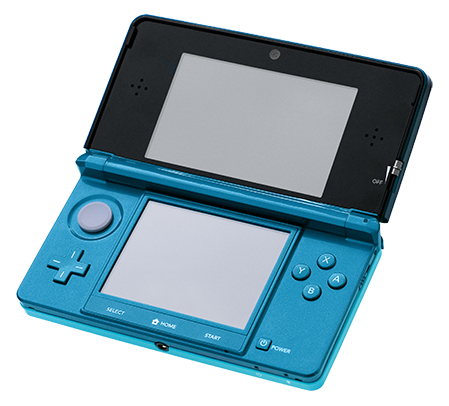
Nintendo 3DS Specifications
The Nintendo 3DS was developed by Nintendo as the successor to the original Nintendo DS. Its design is familiar, but the hardware inside is completely different: a more powerful CPU and GPU let it handle more complex scenes and power the 3D effect of the top screen.
For a long time 3DS emulation looked unlikely. After several failed attempts and little interest from developers, the 3DS emulator Citra appeared and proved that the console could be emulated, and over the following years that it could be done quickly and well. Two other early projects, TronDS and 3dmoo, stopped before getting anywhere near Citra’s level. Official Citra development ended in March 2024, but work continues in community forks based on its code, such as Azahar.
As with many of its devices, Nintendo gave the 3DS a feature new to handhelds: a top screen that shows a 3D effect without the need for glasses. On the original model the effect only worked when the screen was viewed straight on at the right angle, and otherwise looked blurry. The later New Nintendo 3DS improved this with face tracking that adjusts the effect as you move.
The 3DS family also includes the Nintendo 2DS, which replaced the clamshell design with a flat, one-piece body and removed the 3D screen, while keeping much the same hardware. It was widely seen as aimed at younger children, with no hinge to break and no 3D effect, which some believed could strain young eyes.
Advertisement
Nintendo 3DS Emulators

Azahar is a free, open source Nintendo 3DS emulator for Windows, macOS, Linux and Android that continues the work of Citra.

Citra was the leading Nintendo 3DS emulator for Windows, macOS, Linux and Android. Official development stopped in March 2024, and these are its final builds.

TronDS was an early Nintendo 3DS emulator for Windows. It could run some homebrew but never commercial games, and its development has ended.